Zero Dropout All children must have an education to develop human capital and drive economic growth
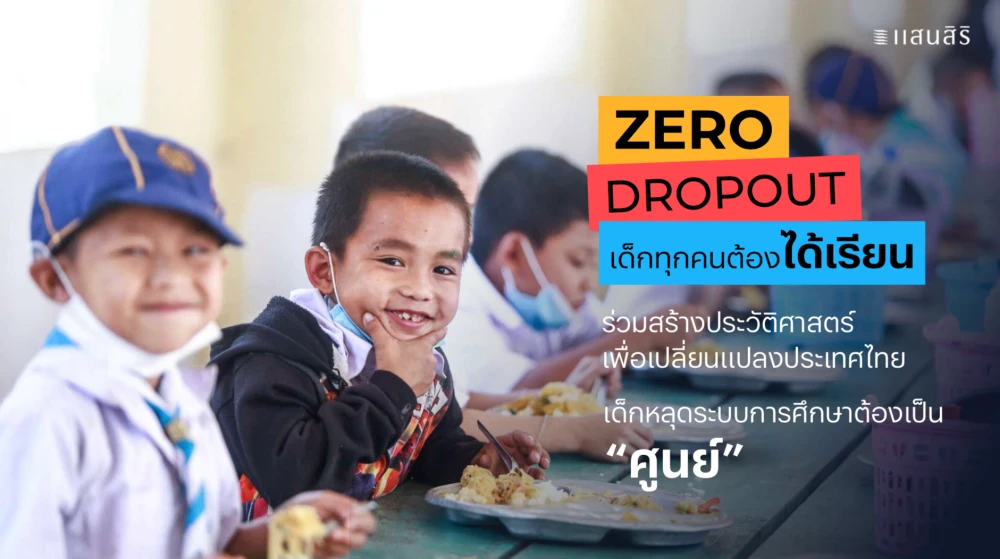
As the project enters its fourth year, the Zero Dropout, "Every Child Must Have an Education," has witnessed Sansiri partnering with the Equitable Education Fund (EEF) to tackle educational inequality within the framework of an inclusive education system that ensures opportunities for all individuals (Education For All). Ratchaburi Province has been designated as a model area for this initiative.
“Ratchaburi model”
In the Ratchaburi education area, it has been observed that students living in extreme poverty constitute 2.56% of the total student population in compulsory education. Consequently, Sansiri has designated Ratchaburi as a model area for the development of life-affirming learning innovations to facilitate long-term systemic change. This initiative emphasises collaboration across all sectors of society, the promotion of effective learning management, and the stimulation of sustainable local partnerships. The company actively engages with the local private sector to assist children in acquiring life skills, enabling them to work and earn income while pursuing their studies. Additionally, Sansiri organises activities that encourage employees to impart their knowledge and professional experiences. Furthermore, it has launched projects to enhance educational environments, including landscaping school facilities, creating engaging learning spaces through BBL games, and establishing agricultural learning areas for students. These initiatives aim to provide diverse learning opportunities and improve the quality of life for children and youth in Ratchaburi Province.
2025 Performances
By 2025, the project is expected to have established substantial systemic changes in education, marked by two key advancements: the nationwide implementation of the "1 School, 3 Models" innovation and the formulation of community plans aimed at preventing at-risk children from disengaging from the education system. This reflects the private sector's role in the sustainable resolution of social challenges.
1. Promotion of the "1 School, 3 Models" Innovation:
This innovation offers educational institutions adaptable learning opportunities across formal, non-formal, and informal environments. It has been officially adopted as a national guideline by the Ministry of Education, with knowledge dissemination facilitated through nationwide workshops. This initiative dismantles structural barriers and signifies a policy shift that mitigates the risk of dropout among children and youth from the education system. Additionally, it fosters a learning ecosystem that emphasises the importance of learner diversity.
2. Community Plan Development Project to Prevent At-Risk Children from Dropping Out of Education in Ratchaburi Province:
The community development plan focuses on the local level, transforming the community's role from a recipient of assistance to an owner of change. This transformation is facilitated through the implementation of five tools for participatory community learning in 10 pilot communities across 7 districts:
- Community Mapping: This tool enables understanding of the physical and social aspects of the lives of children and youth, allowing for the identification of learning resources, risks, and opportunities to design monitoring systems and promote community learning.
- Community Organisation Structure: This tool assists in identifying social capital and collaborative networks within the area, helping to locate key stakeholders responsible for the care and prevention of children dropping out of the education system.
- Community Calendar: This tool provides insights into the lifestyle and significant periods within the community, aiding in the planning of support and preventive measures tailored to the context and timing for children at risk of dropout.
- Community History: This tool contributes to building an understanding of the community's identity, beliefs, and shared experiences, thereby enhancing trust and ensuring operations that honor local values.
- Community Resources and Challenges: This process involves a collaborative analysis of the community's strengths and challenges, allowing for the identification of priorities and the design of targeted plans to prevent children from leaving the education system.
The community is empowered to assess its own challenges, resources, and potential, thereby designing plans that align with the actual context, which encompasses economic conditions, familial circumstances, and access to welfare. This project not only seeks to address immediate issues but also aims to establish a foundation for long-term cooperation among the community, schools, and local agencies, culminating in the "Ratchaburi Model." This model serves as a policy framework that has the potential for national scale-up under the initiative of Thailand Zero Dropout, marking a significant advancement towards inclusive and sustainable social development.
In 2025, Sansiri, in collaboration with the Ratchaburi Provincial Working Group under the Zero Dropout project, conducted field visits to assess challenges and monitor the implementation of community development plans. This initiative supported 3,463 at-risk children and youth vulnerable to educational dropout, including primary and lower secondary students. The support included 9 students from the Learn to Earn program (facilitated through creative learning centers), 98 students from the 1 School 3 Model program, and the identification of 756 children who had previously dropped out, conducted through local administrative organisations (LAOs) and provincial-level mechanisms aimed at transforming sub-districts and districts into “areas of opportunity” for follow-up and reintegration into education. Additionally, 300 volunteers participated from the 3-Power group. From 2022 to 2025, a total of 13,395 children received assistance. The Ratchaburi Model has been expanded to other provinces nationwide, to achieve Thailand Zero Dropout, which aims to eliminate the prevalence of out-of-school children and youth.